About Drive Toolkit
Smart auto care, one garage win at a time.
Drive Toolkit is a practical automotive resource: tool advice, maintenance guidance, and straightforward fixes for people who do their own work in their own garage.
What this site is for
Most tool advice online is written to move product. You get a spec sheet, a star rating, and a buy button — and none of it tells you the thing you actually needed to know, which is whether the tool will do your job safely in your space.
Drive Toolkit is built to answer that question instead. The guides here are aimed at the moment before you commit: the engine is still in the bay, the money is still in your pocket, and you are trying to work out what you actually need.
That means being straight with you about things the box will not mention — like the fact that a “2-ton” engine hoist stops being a 2-ton engine hoist the moment you extend the boom far enough to reach a truck’s engine.
What this site covers
Every guide published here so far is about engine hoists — sizing, lift height, real working capacity, weight and storage, and how they work.
The wider subject areas listed on the home page — pressure washers, coolant flush systems, and car detailing kits — do not have guides behind them yet. When they do, they will be held to the same priorities as everything else here: what a tool really costs you in space and money, what it will really lift or handle, and how not to get hurt using it.
Who it is for
Home mechanics and weekend garage workers. People pulling a motor for the first time, people setting up a garage from an empty slab, and people who just want a straight answer before spending real money on a heavy tool.
You do not need to be a professional to use this site. You do need to respect the work — some of what is covered here can seriously injure you if it is done carelessly, and the guides say so where that is true.
How we work
Our standards for what gets published — including why we quote real working limits instead of headline ratings, why we give ranges instead of false precision, and how we handle corrections — are set out in the Editorial Policy.
How the site is funded, and what that means for what you read here, is set out in the Affiliate Disclosure.
The safety limits of general guidance like this — and when to stop reading and call a professional — are set out in the Disclaimer.

Why I Started Drive Toolkit
Hi, I’m Herbert Langham — the person behind Drive Toolkit.
If you’ve landed here, you’re probably staring at a check-engine light, a repair quote that made your stomach drop, or a project sitting half-finished in your driveway. This page is my answer to the question every new visitor eventually asks: who’s actually writing this stuff, and why should you trust it?
Who I Am
I’m a professional mechanic. I’ve spent my career on the shop floor, elbow-deep in engines, diagnosing problems for a living rather than reading about them online. That’s the short version of my “credentials” — not a blog built on borrowed knowledge, but years of actually turning wrenches for a paycheck.
Outside the shop, I’m the guy friends and family call before they call anyone else when their car starts making a noise it shouldn’t. I’m writing this from the same place most of you are reading it: wanting a car that runs right without getting taken for a ride to do it.
How I Got Into This
I didn’t fall into cars through some romantic origin story. I got into the trade because I wanted work with my hands that meant something, and it turned out I was good at it and genuinely liked it. Years of formal training and on-the-job experience followed, then years of doing this professionally — diagnosing the same recurring problems, watching customers get quoted for repairs they didn’t need, and watching other customers get quietly overcharged for repairs they did need.
That combination is really what pushed me toward this site. I’ve spent a long time on the other side of the service counter, and I’ve seen how often the gap between “what’s actually wrong with your car” and “what you get told is wrong with your car” comes down to nothing more than whether you have someone in your corner who knows the trade.
What I’ve Actually Learned
Where I’m confident is in the space of practical, hands-on diagnosis and repair — because that’s the job I’ve done for years. Specifically:
- Diagnosing common mechanical and electrical issues before throwing parts at a car
- Routine maintenance that actually extends a vehicle’s life, versus maintenance that’s mostly upsell
- What a repair should realistically cost in parts and labor, so you can tell a fair quote from an inflated one
- Which repairs are genuinely safe and reasonable for a competent DIYer to tackle at home, and which ones aren’t worth the risk
I don’t know much about high-performance builds, race prep, or restoring classic cars from the ground up, and I won’t pretend otherwise on this site. What I know is what keeps an ordinary daily driver running reliably and affordably — because that’s the work I’ve actually done, day in and day out.
The Gap I Kept Running Into
Here’s what sent me toward starting a site instead of just doing this at the shop: most DIY car advice online is either too vague to actually use, or written by people who’ve never had to stand behind a repair.
Search for a repair guide and you’ll usually find one of two things — a two-paragraph article with no real diagnostic detail, clearly written to rank for a keyword rather than to fix a car, or a forum thread full of conflicting opinions with no way to tell who actually knows what they’re talking about. What’s missing is straightforward, trade-informed guidance that tells you plainly: here’s what’s likely wrong, here’s what it should cost to fix, and here’s whether you can reasonably do it yourself.
What I’m Building Here
So that’s what Drive Toolkit is for. My commitment on this site is simple: I write from the same diagnostic process I use professionally, not guesswork repeated from other blogs. If a job is genuinely DIY-friendly, I’ll walk you through it properly. If it isn’t — if the risk, tools, or consequences of getting it wrong make it a bad candidate for a driveway repair — I’ll say so plainly instead of padding out a guide that sends you into something you shouldn’t tackle.
Drive Toolkit is for daily drivers who want to save money on repair and maintenance without getting burned — whether that means doing the work yourself or just knowing enough to spot a bad quote before you pay for it.
The site will mainly cover four things:
- DIY repair and maintenance guides — clear, step-by-step jobs a competent home mechanic can actually do
- Diagnosis before repair — how to figure out what’s actually wrong before spending money on parts
- Cost and quote guidance — what jobs should realistically cost, so you can evaluate a shop’s estimate
- Know your limits — honest calls on which repairs are worth doing yourself and which ones belong at a shop
I’m aiming to publish a new, detailed guide roughly once a week.
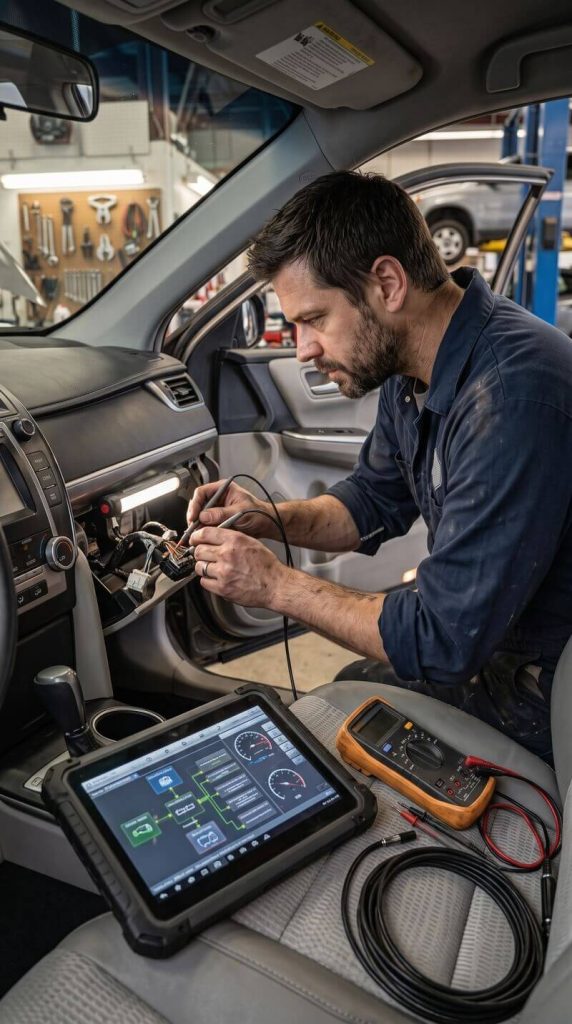
Let’s Keep Your Car Running Right
This site isn’t meant to be a one-way lecture — I’d genuinely like it to be a conversation. If you’re standing over an engine bay right now trying to figure out what’s actually wrong and what it should cost to fix, you’re exactly who I’m writing for.
A good place to start is my guide to [diagnosing the most common check-engine light causes before you pay for a diagnostic] — link it to whichever piece you consider your strongest starting point. And if you’ve got a question about your own car, drop it in the comments; I read and try to answer every one myself.
You can also reach me directly at hello@drivetoolkit.com or through the contact page if you’d rather not go the comment-thread route.
Let’s get your car sorted — one honest repair at a time.
Get in touch
Corrections, questions, and requests for guides that do not exist yet are all welcome. Comments are open on every guide on this site, and that is the surest way to reach us today.