Most people trust the label on their hoist—and that is where trouble starts. Engine hoist lift capacity is the max weight it can safely lift, but only in ideal settings, not real garages. I learned this the hard way pulling a V8, when my “2-ton” lift struggled at full reach. In real-world use, especially in tight US garages with bigger trucks, that number drops fast with boom extension. Keep reading to see how much your hoist can really handle and how to stay safe.
What Is Engine Hoist Lift Capacity (And Why It Matters)?
A quick reality check. Most people guess wrong. I did.
It was a hot Tuesday in my cramped garage, smelling of old oil. I stared at a half-lifted V8. The metal frame groaned. My hands shook. I thought, “Did I buy the wrong tool?” That is when I learned the hard truth about engine hoist lift capacity.
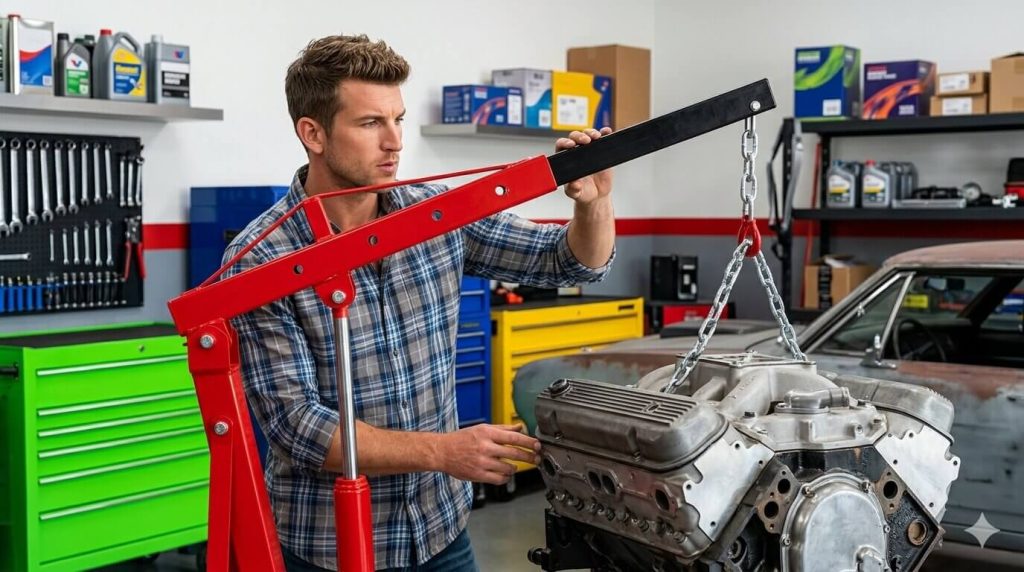
Simple Definition (No Jargon)
What does “lift capacity” actually mean? It is the max weight your hoist can safely hold. But here is the catch.
The sticker shows the rated capacity from a perfect test lab. Your garage is not a lab. Real-world lifting power drops fast the further you slide the boom arm out to reach your car.
| The Box Says (Rated) | The Reality (Real-World) |
| 2-Ton Limit | Holds 4,000 lbs only if the arm is pulled all the way back. |
| “Heavy Duty” | Strong steel, but it will still tip over on an uneven floor. |
Why Capacity Isn’t Just a Number
Capacity is a strict safety limit, not a suggestion. Push it, and bad things happen fast.
- Safety Risks: Overloading bends the boom arm. Worse, the hydraulics could fail and drop the engine.
- High Costs: A dropped engine cracks the block. A tipping hoist crushes feet (I almost lost a toe that Tuesday!).
- Stability vs. Strength: A hoist might have the brute strength to lift a heavy block. But if the base is too narrow for the arm length, it will tip forward. You need both strength and balance to stay safe.
How Much Weight Can an Engine Hoist Lift?
Everyone asks me this. My answer? It depends. It is not just about the block of iron. It is about how you use the tool. When I first started, I thought a “1-ton” lift meant I could pick up anything under 2,000 lbs from any angle. Boy, was I wrong.
Typical Engine Hoist Capacities
You will mostly see three sizes at the shop. They look big, but they have limits:
- 1-ton (2,000 lbs): Good for small cars.
- 2-ton (4,000 lbs): The sweet spot for most DIY guys.
- 3-ton (6,000 lbs): The “big guns” for heavy trucks and diesel work.
Real-World Lifting Examples
To keep your engine safe, you need to know what it weighs. Here is a quick cheat sheet I keep in my head:
| Engine Type | Typical Weight | My Experience |
| Small 4-Cylinder | 300–400 lbs | Easy lift, even for small hoists. |
| V6 Engine | 400–600 lbs | Feels solid, but watch the balance. |
| V8 Engine | 500–700 lbs | This is where things get heavy fast. |
| Diesel Truck | 800–1,500+ lbs | Needs a heavy-duty hoist and a clear floor. |
Why Your Hoist Might Lift Less Than Rated
Just because the box says 2 tons doesn’t mean it can lift that much right now. I learned this the hard way when my boom started to groan during a V8 pull.
- Boom Extension: If you extend the arm to reach into a deep bay, the engine hoist lift capacity drops. A 2-ton hoist might only hold 500 lbs at full reach.
- Uneven Load: Is the engine tilting? If it is not level, the weight pulls on one side. This makes the hoist work much harder.
- Old Hydraulics: If your ram is leaking or old, it won’t hold pressure. It might lift the weight, but it could slowly sink while you are trying to work. Always check for oily spots on the floor!
The Hidden Factor: Boom Position and Capacity Loss
This is where I messed up on my first build. You see that big “2-ton” sticker and think you are totally safe. But that number is a best-case scenario.
One dusty Sunday, I pulled the heavy metal pin. I slid the boom arm to its longest reach to grab a deep-set motor. As I pumped the handle, the steel groaned. I learned fast: your true engine hoist lift capacity drops every time you extend that arm.
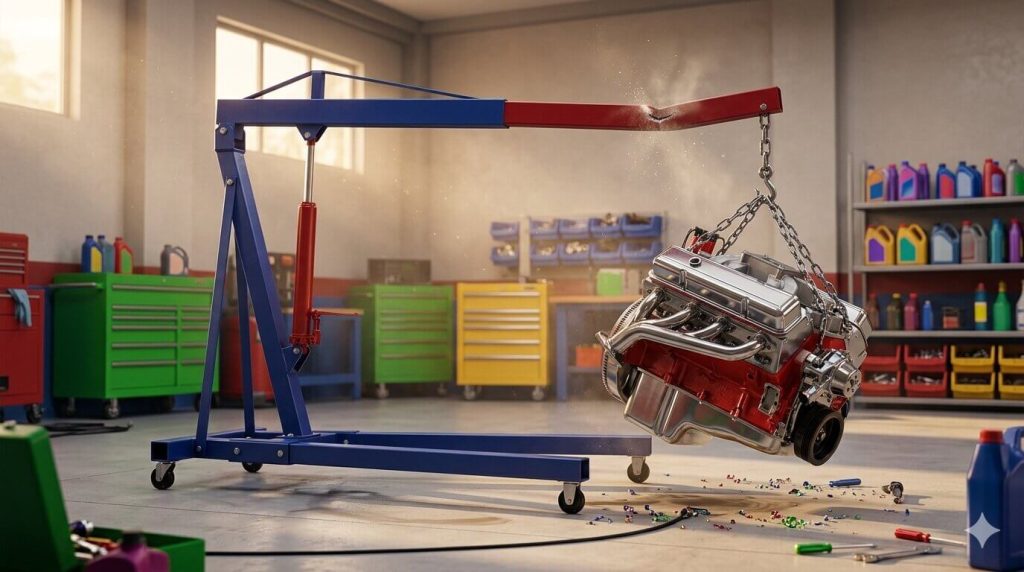
How Boom Length Affects Lifting Power
Think of a seesaw. Weight on the very edge pulls you down faster.
- Short boom (pulled in): Maximum strength. Sturdy and safe.
- Long boom (stretched out): Lowest strength. High risk of tipping.
Example Capacity Chart (Typical 2-Ton Hoist)
I taped this exact cheat sheet to my hoist frame. Look how fast the power vanishes as you reach further out.
| Boom Reach | Safe Limit | Reality Check |
| 500 mm | 2 tons (4,000 lbs) | Pulled tight. Full power. |
| 750 mm | 1.5 tons (3,000 lbs) | One notch out. Still solid. |
| 1000 mm | 1 ton (2,000 lbs) | Half your capacity is gone! |
| 1250 mm | 0.5 tons (1,000 lbs) | Fully extended. Very weak lift. |
Why Manufacturers Design It This Way
It is just basic physics. As you slide the arm forward, the center of gravity shifts with it. If a hoist let you lift 4,000 pounds at full stretch, the whole rig would face-plant right into your car bumper.
Once, I saw my back wheels lift an inch off the cold concrete when I reached too far. My heart stopped! Lowering the weight limit at full reach keeps the base grounded, the load balanced, and your toes safe.
How to Calculate the Weight of an Engine (Before You Lift)
Guessing is risky. One freezing Thursday night, I guessed an old straight-six motor was not “too heavy.” When I pumped the handle, my hoist squeaked. The back wheels lifted right off the icy concrete! I almost pushed my engine hoist lift capacity to the breaking point. Now, I always do the math first.
Method 1: Check Manufacturer Specs
Start with the facts. I usually grab my greasy owner’s manual first. If your book is missing, grab your phone. Online engine specs and car forums are great for this. Just search for your exact motor code. Do not guess. Find the real number.
Method 2: General Weight Estimates
Not all metal is the same. An old cast-iron block is a heavy beast. A newer aluminum block is much lighter. Bigger engines usually weigh more, but the type of metal matters most.
Here is a quick cheat sheet I use:
| Engine Type | Material | Base Weight | My Experience |
| V8 | Cast Iron | 600 – 700 lbs | Scary heavy. |
| V8 | Aluminum | 400 – 500 lbs | Smooth but bulky. |
| 4-Cylinder | Cast Iron | 300 – 400 lbs | Very easy lift. |
Method 3: Add the Extras
This is the trap I fell into. I looked up the engine weight, but I forgot the extra parts. You rarely pull a bare block.
- The Transmission: Are you pulling the gearbox out with the motor? An automatic transmission can easily add 150 to 200 pounds.
- The Extras: Heavy iron exhaust manifolds, the alternator, and the starter add up fast.
- Hidden Fluids: Oil and coolant are heavy. A single gallon of water weighs about 8 pounds. It all counts toward your total load.
Quick Rule of Thumb
Always add a 20 to 30 percent safety buffer. If your math says 600 pounds, treat it like 800. This keeps you well below your engine hoist lift capacity. Hearing your steel frame groan is a sound you never want to hear!
Choosing the Right Engine Hoist Capacity
Buying “just enough” capacity is a huge mistake. I learned this on a rainy Wednesday. My garage smelled of old grease. I stared at a heavy block, terrified my cheap tool would snap. Saving fifty bucks is never worth the risk.
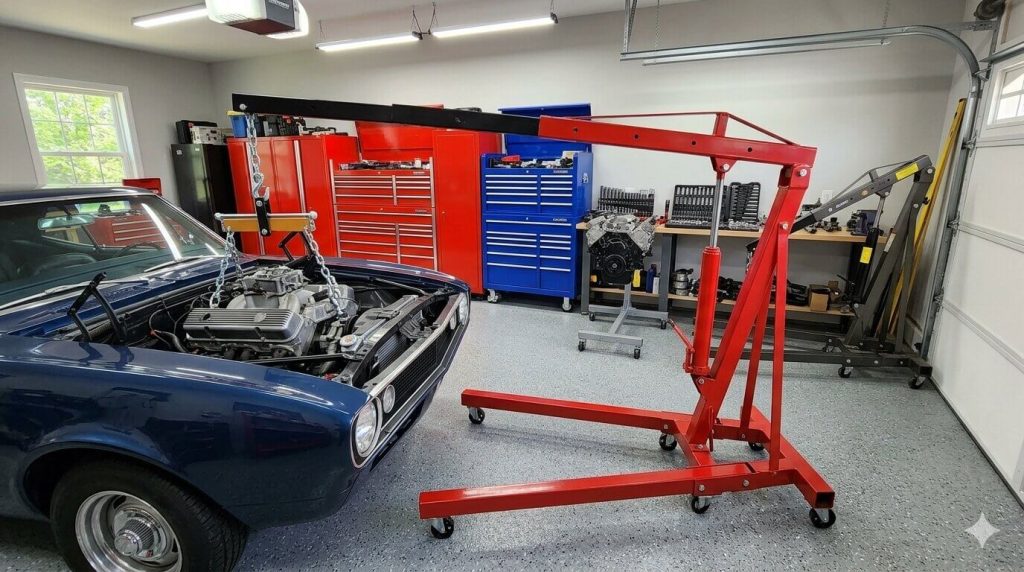
Minimum Capacity You Should Consider
A 2-ton hoist is the absolute sweet spot for a home garage.
A 1-ton lift seems fine for tiny cars. But what if you tackle a bigger project next year? A 2-ton model gives you a safe buffer. It also maintains a higher engine hoist lift capacity even when you extend the boom arm.
When You Actually Need a 3-Ton Hoist
Do not mess around if you work on heavy iron. You absolutely need a 3-ton hoist if you lift:
- Big diesel engines: Giant blocks of heavy iron.
- Heavy-duty trucks: One-ton pickups or farm rigs.
- Commercial gear: Tractors and heavy work vans.
These hoists are massive. But dropping a heavy diesel motor is a disaster. Do not risk it.
Space vs Power Trade-Off
Lifting power takes up precious floor space. You must pick between a foldable hoist and a rigid frame.
| Hoist Style | The Good | The Bad | My Verdict |
| Foldable 2-Ton | Saves space. Folds up fast. | Legs spread wide. Feels less rigid. | Perfect for a tight 1-car garage. |
| Fixed 3-Ton | Max lift limit. Super solid. | Takes up half the room. | Best only if you have a big shop. |
A folding lift saved my sanity. When the job is done, I tuck it away by the lawnmower. Always match the tool to your space.
Real-Life Scenario: Lifting an Engine in a Tight Garage
Picture this. It is a chilly Saturday morning. The garage floor is still damp from a rainstorm. I am crammed between my messy workbench and a rusty car fender. I am trying to line up the hook on my motor. Nothing feels perfectly balanced. My coffee is cold. My back already hurts.
This exact moment is when your engine hoist lift capacity is truly put to the test. If your hoist is too weak, a tight space makes everything much worse.
What Usually Goes Wrong
I have made these mistakes so you do not have to. When you push a weak hoist to its absolute limit, things get scary fast.
- The engine tilts mid-air: One second, the lift looks fine. The next, the heavy block suddenly shifts. The metal chain slips. Your heart jumps right into your throat.
- The hoist struggles and jerks: You pump the handle hard. But the arm does not rise smoothly. It bounces. It shakes the whole metal frame.
- The wheels refuse to roll: A heavy load pushes those tiny wheels deep into the damp concrete. You try to pull the hoist back, but it just digs in. It will not budge. You are stuck holding your breath.
How Proper Capacity Prevents Problems
Having the right engine hoist lift capacity changes the whole day. It turns a stressful, scary job into a safe and smooth process.
- Smoother lift: A strong hydraulic ram lifts the heavy iron block like it is nothing. There is no jumping, shaking, or squeaking.
- Better control: You can easily guide the block up or down just an inch at a time. This is exactly what you need to line up tricky motor mounts in a dark engine bay.
- Less stress on equipment: The thick steel legs do not bow. The wheels actually spin when you push the frame. Your toes stay safe.
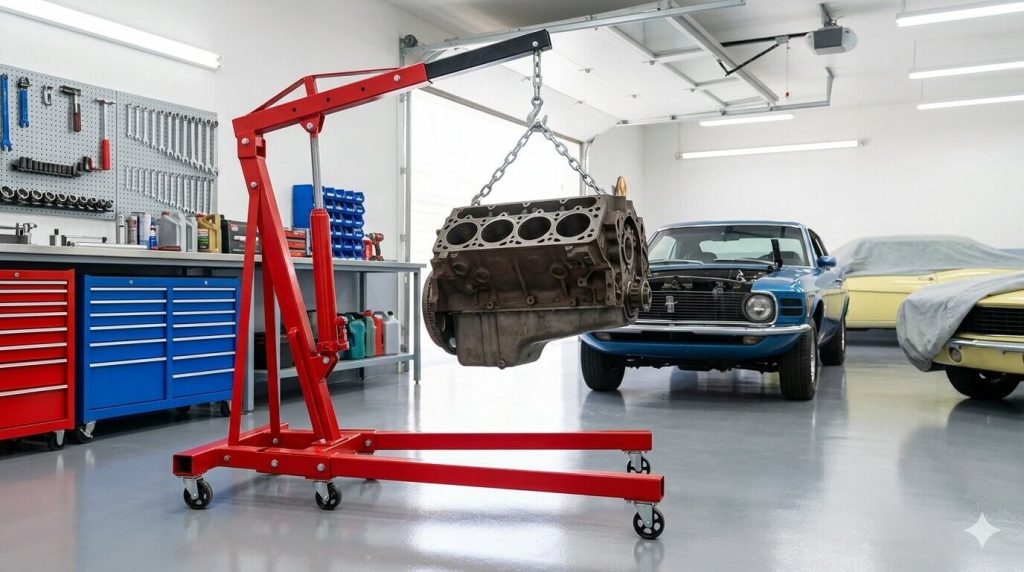
Here is a quick look at how the right tool fixes common garage headaches:
| The Garage Problem | Weak Hoist Reality | Right Capacity Fix |
| Lifting the Block | Jerks, groans, and bounces. | Rises very smoothly. Easy to pause. |
| Moving the Rig | Wheels dig into the damp floor. | Rolls easily across the rough concrete. |
| Your Stress Level | High. Sweating and hoping it holds. | Low. You have total and safe control. |
Safety Tips Most People Learn the Hard Way
It was a late Friday night in my dusty shop. I was tired. I ignored a tiny drop of oil on my lift ram. That was a huge mistake. When I raised the block, the engine dropped two inches fast. My heart raced. I had to grab the cold steel frame to steady myself. I learned that day that the safety rules truly matter. They are rarely printed on the box, but they save lives.
Always Stay Below Max Capacity
Never push your engine hoist lift capacity to the very edge. If the box says your lift holds two tons, do not try to hold two tons.
- Ideal working range: Aim for 70 to 80 percent of your max limit.
It is like eating a massive dinner. You can do it, but you feel terrible right after. Keep a safe weight buffer. Your hoist will last longer, and you will stay safe.
Check These Before Every Lift
I always do a fast walk around my hoist now. I wipe down the cold metal with an old rag. I look closely for these three bad signs:
- Hydraulic leaks: Look for oily spots on the floor. A leaky ram will drop your motor very fast.
- Bent frame: Check the steel legs. A bent leg means the hoist is weak and ready to fail.
- Loose bolts: Grab a wrench. Check the main pivot points. A loose bolt can easily snap under heavy pressure.
Use the Right Accessories
Your hoist is only as strong as its weakest link. I once used a cheap chain. It stretched like a rubber band. I was terrified. Now, I only buy the good parts.
- Load leveler for balance: This tool keeps the engine totally flat. It stops the heavy load from swinging back and forth.
- Rated chains and hooks: Buy strong lift chains. Never use a cheap tow strap to pull a block.
Here is a quick checklist I use before every big lift:
| Part to Check | What I Look For | Why It Matters |
| The Floor | Fresh drops of dark oil. | Stops the hydraulic ram from failing. |
| The Frame | Bent steel or cracks in paint. | Keeps the rig standing tall and stable. |
| The Chains | Stretched metal links. | Stops the motor from falling on your feet. |
Common Mistakes When Using Engine Hoists
Some of these seem harmless until they happen to you. I learned my lesson on a hot Sunday. My small garage smelled like old gas and sweat, and I was rushing.
Overloading “Just a Little”
I was tired. I thought, “It is just fifty extra pounds. What could go wrong?” A lot, actually. Overloading is much more dangerous than you think. Pushing past your engine hoist lift capacity stresses the steel frame. It also ruins the hydraulic seals.
I pumped the handle, and then I heard a loud hiss. The arm jerked. The heavy motor dropped a fast inch. My heart jumped right into my throat. Never push your luck. A blown seal means a falling motor.
Ignoring Boom Settings
This is a trap I fell right into. I misread the capacity labels. I slid the boom arm out to its longest setting to reach deep into a rusty truck bay. I assumed the rig still had full power. It did not.
The label said two tons at the base, but only half a ton at the tip. The thick steel arm bowed like a cheap fishing rod. The metal groaned loud enough to make my ears ring. Always check the pin setting before you try to lift.
Lifting on Uneven Ground
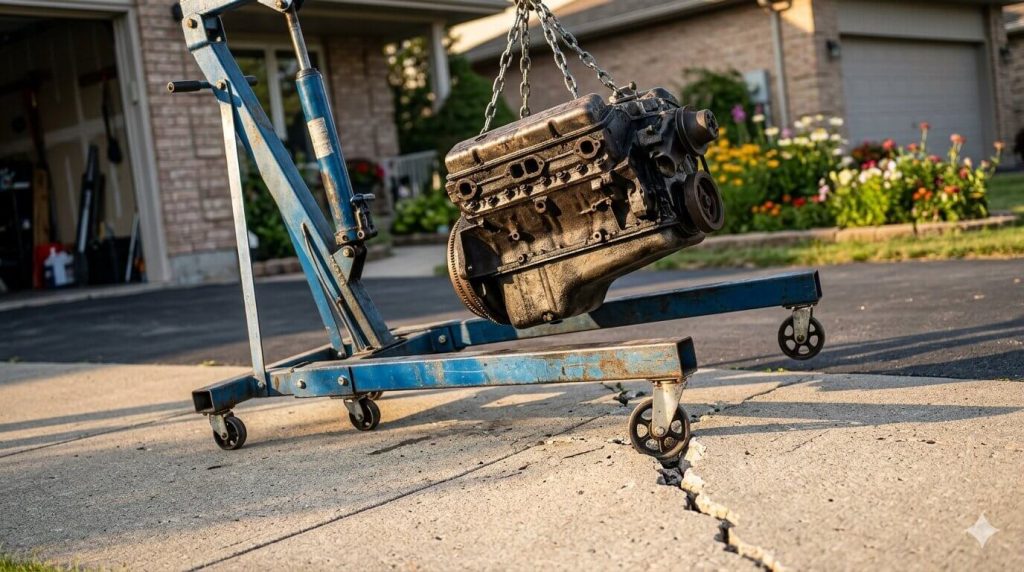
My driveway has a tiny slope. You can barely see it. But gravity knows it is there. I tried to roll a heavy block out into the afternoon light. The front wheel caught a small crack in the concrete.
The whole frame tilted hard to the left. I tried to hold it up with my bare hands, acting like I was Superman. I am not. The increased tipping risk on a slope is huge. Keep your work space totally flat and swept clean.
Quick Mistake Cheat Sheet
| The Mistake | What Usually Happens | How I Fix It Now |
| Going over max weight | Blown seals and fast drops. | Keep a strict 20% safety buffer. |
| Pulling the arm far out | Bends the steel boom arm. | Read the label right at the pin. |
| Working on sloped floors | The whole rig tips over fast. | Only lift on flat, swept concrete. |
FAQ
Can a 2-ton engine hoist lift any car engine safely?
A 2-ton engine hoist lift capacity is enough for most engines. But not at full reach. Always check boom position and keep a safety buffer to avoid tipping or strain.
How do I know if my engine is too heavy for my hoist?
Check engine specs first. Then add weight for parts and fluids. Compare that total to your engine hoist lift capacity at your boom setting, not the max label.
Does boom extension really reduce lifting power that much?
Yes, a longer boom cuts engine hoist lift capacity fast. At full extension, a 2-ton hoist may drop to 500 lbs. Always read the chart before lifting.
Is it safe to use an engine hoist at full capacity?
It is risky to push full engine hoist lift capacity. Stay around 70–80% of the limit. This keeps the lift smooth and reduces stress on the frame and hydraulics.
What accessories help improve lifting stability?
A load leveler helps balance the engine. Strong chains also matter. These tools do not increase engine hoist lift capacity, but they make lifting safer and easier.