I stared at the huge box in my yard and my back hurt. So, how much does an engine hoist weigh? Most home lifts are 70 to 120 pounds, and big shop tools top 200. I learned this moving a new lift from a local Harbor Freight to pull a big Ford V8. Let us see why this bulk matters before you buy.
Average Engine Hoist Weight (Quick Breakdown by Type)
Not all hoists feel the same when you try to drag them across a garage floor at 9 PM. Trust me, I have been there. This is exactly where the real differences show up. If you are wondering how much does an engine hoist weigh, the answer really depends on the exact style you buy.
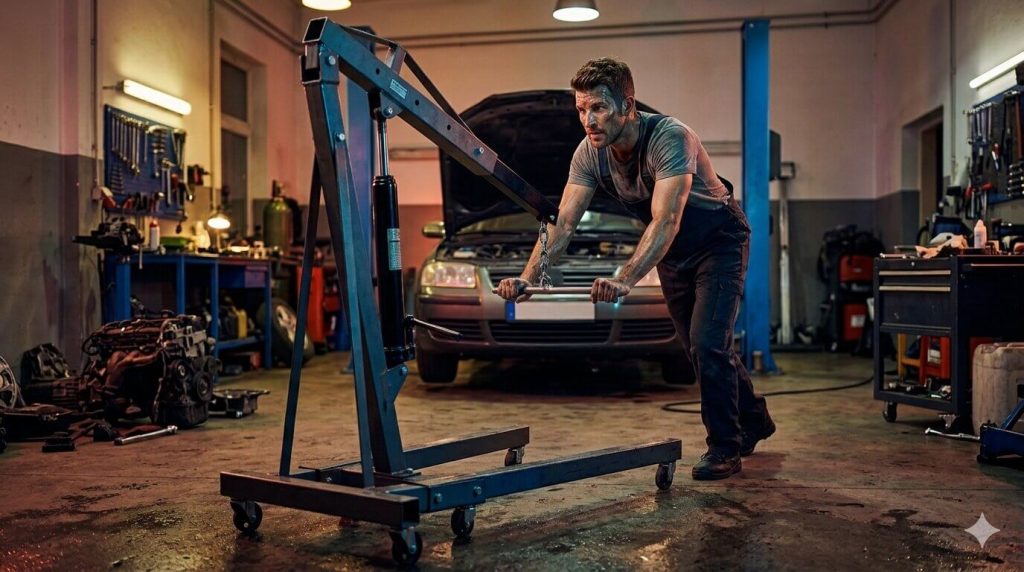
Foldable Hydraulic Engine Hoists
- Typical weight: 70–120 lbs
These are the most common hoists you will see in home garages. Mine sits folded up in the corner of my shop right now. They use a solid steel frame, but they are built specifically for portability.
The real-world feel: You can manage this weight by yourself. I roll mine out solo all the time. But it gets awkward fast. Pushing 100 pounds of steel is fine on smooth concrete. But the second you hit a crack or an uneven floor, it fights back.
Heavy-Duty Shop Engine Hoists
- Typical weight: 150–250+ lbs
These beasts are built for daily abuse in busy auto shops. They feature much thicker steel tubing and a wider base so they do not tip over easily.
The real-world feel: You will feel this weight immediately. I helped a friend move his commercial shop crane last month, and it was a chore. There are no quick “one-hand adjustments” with these. You have to grab the boom and put your whole back into it just to reposition the wheels.
Aluminum Engine Hoists (Lightweight Models)
- Typical weight: 55–90 lbs
Aluminum models are the lightweight kings of the lifting world. They are vastly easier to move and tuck away. I mostly see guys use these for mobile mechanic work or weekend track days.
The real-world feel: Because they are so light, you can fold and unfold them without breaking a sweat. The trade-off is a slight drop in long-term durability compared to heavy steel. However, they are absolutely ideal if you are constantly packing the tool away to save space.
What Actually Determines Engine Hoist Weight?
I once tested two “2-ton” hoists side-by-side. One felt like a tank. The other felt like a cheap toy. If you are wondering how much does an engine hoist weigh, it really comes down to these four parts.
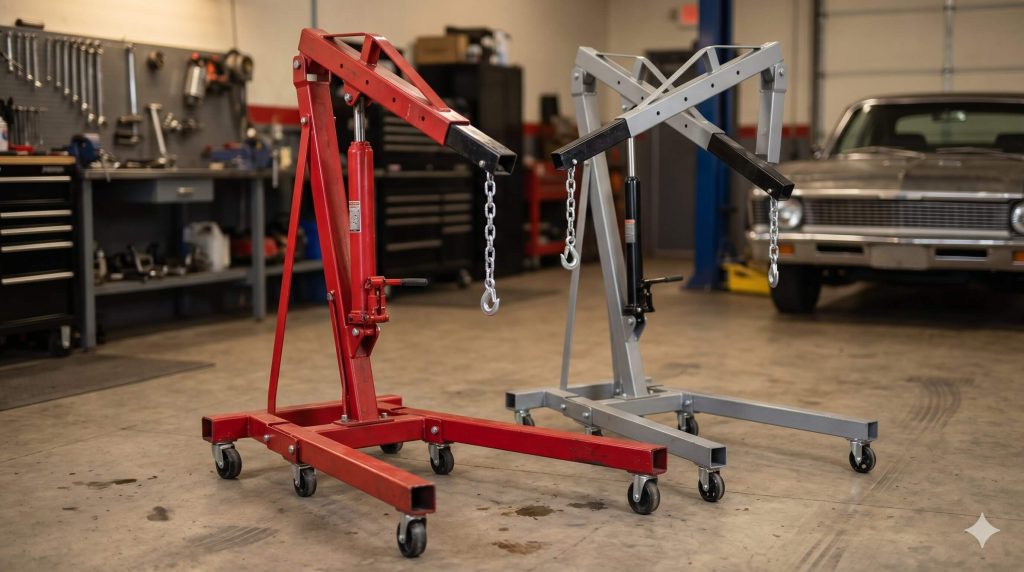
Steel Thickness and Frame Design
Thick steel adds major pounds, but it keeps things safe and stable. Cheap models use thin metal to cut weight. They are easy to move. However, they feel scary and wobbly when holding a real engine block.
Lifting Capacity (1-Ton vs 2-Ton vs 3-Ton)
More lifting power requires stronger, heavier parts. But smart design matters. A well-engineered 2-ton model can actually weigh less than a clunky, badly built 1-ton unit.
Hydraulic Ram Size
The hydraulic cylinder is a dense, heavy chunk of metal. A larger ram adds weight fast. But you want that weight. It gives you the smooth, solid control you really need when pumping the jack.
Wheel Type (Casters vs Heavy Rollers)
Solid steel casters are heavy. Some brands use light plastic wheels to save weight in the box. The problem? Those lightweight wheels will lock up the second they hit a tiny pebble on your rough garage floor.
Does Weight Affect Performance? (Yes—But Not How You Think)
I used to think a heavy hoist was simply better. But that is not true. Heavier is not always perfect. Lighter is not always easy. When you ask how much does an engine hoist weigh, you should also ask how that mass changes the way you work.
Stability During Lifts
When I pull a motor with the boom fully extended, I want zero wobble. A heavier base gives you that safe, solid feel. I once used a very light model to pull a heavy block. Honestly, it felt nervous. The whole metal frame shook. Heavy steel stays put and absorbs the stress.
Portability vs Control Trade-Off
There is a very real trade-off when you are working alone.
- Light hoists: They are a breeze to roll across the shop. But they are hard to keep completely still when you are trying to line up motor mounts.
- Heavy hoists: They are incredibly stable and safe. But trying to shove a 200-pound rig just half an inch to the left mid-job will make you sweat.
Garage Floor Reality Check
Your floor changes everything. On perfect, smooth concrete, the weight barely matters. A heavy shop crane glides right along. But my home garage has a rough, dusty floor. On bad concrete, heavy hoists become a nightmare to push. Even a tiny piece of debris or a small stray bolt acts like a brick wall. It brings all that heavy steel to a dead, sudden stop.
Choosing the Right Weight for Your Situation
When you buy a shop crane, do not just ask, “how much does an engine hoist weigh?” You should ask, “How often will I fight this thing?” Picking the right tool for your space saves you a lot of grief.
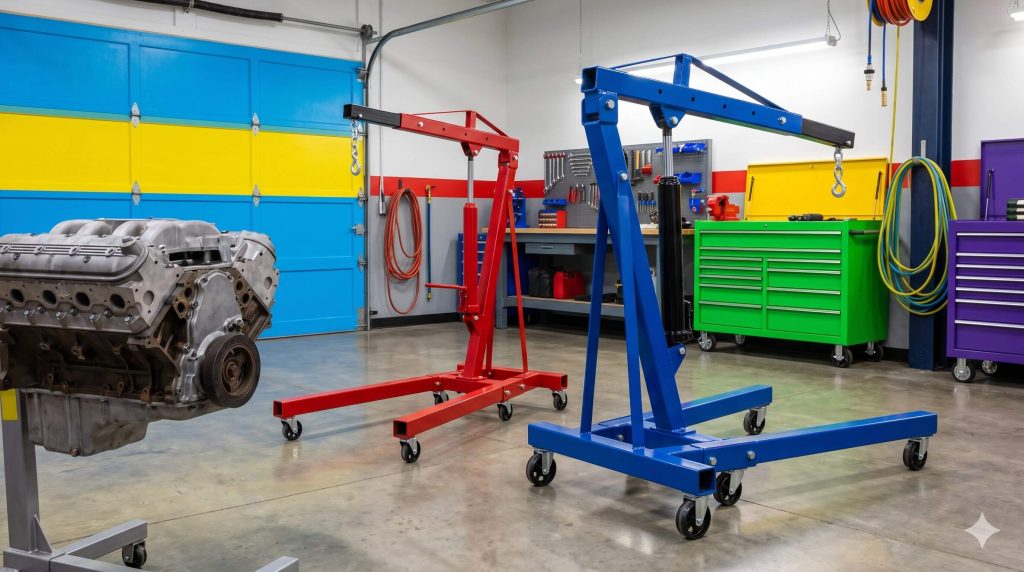
If You Are a Weekend DIYer
Do you only pull a motor once a year? Go lighter. Look for units in the 70 to 120-pound range. You will not lift engines every day. Choose easy use over brute strength. A lighter tool is a breeze to roll out on a Saturday.
If You Work in a Garage or Shop
Do you work in a busy auto shop? Go heavier. You need a tool over 150 pounds. When you work daily, stability is key. You will love that extra mass. It gives you safe, smooth control when you use it a lot.
If Space Is Tight
My own garage is very small. If your space is tight, pick a folding frame over raw weight. A heavy hoist that folds up neat is better than a light one that blocks your car. It just makes your work life better.
Common Mistakes People Make About Engine Hoist Weight
This is where I see most folks get it wrong. I made these exact mistakes, and I paid for it later with a sore back. Before you figure out exactly how much does an engine hoist weigh, make sure you avoid these common traps.
Confusing Lift Capacity with Hoist Weight
A “2-ton hoist” does not actually weigh two tons. That number is just its lifting ability. It refers to how much engine mass the crane can hold safely. The actual physical tool weighs a tiny fraction of that. Do not let those big numbers scare you off.
Assuming Lighter Means Easier to Use
I used to think a lightweight tool was always better. But a light weight does not equal an easy job in the real world. A heavy steel frame with great balance and smooth wheels is much easier to push. Good wheel quality and frame design matter way more than raw weight alone.
Ignoring Floor Conditions
Rough floors make weight problems much worse. I dragged a light 90-pound hoist over bad concrete once. It fought me so hard, it felt like pulling 200 pounds. Small cracks and dirt will stop cheap wheels dead in their tracks. Always check your garage floor before you buy.
Final Thoughts (Without the Fluff)
Weight is not just a random number on a cardboard shipping box. I learned this the hard way. That weight shows up right when you are completely tired. It hits you when your hands are covered in black motor grease, and the heavy crane simply will not roll where you need it to go.
So, when you finally ask yourself, how much does an engine hoist weigh, think about your own garage space. Think about your back. Do not just buy the heaviest, thickest steel tool because it sounds the strongest on paper. Choose your lifting gear based on how you will actually use it in real life. Your body will thank you later.
Frequently Asked Questions
Can one guy move a shop crane?
Yes, if it has good wheels. You can roll a heavy engine lift on a flat floor. Do not try to pick it up alone. That will hurt your back. Read more of our safe tips!
Do folding motor lifts weigh less?
No, they do not. A folding hoist uses thick steel pins and plates. This keeps the tool safe but adds bulk. You save room, not pounds. Check out our guide to learn why.
What is the heaviest part of a cherry picker?
The main steel base adds the most bulk. The big jack is also a huge chunk of metal. This thick steel makes the lift safe to use. Find out how parts change the mass.
Will a new engine lifter fit in my car?
It might fit in a car if you fold the seats down. But a truck bed is much better. The box is huge and very dense. Always ask a pal to help you load this heavy tool.
Why are cheap hoists hard to push?
Cheap tools use bad plastic wheels. These light wheels get stuck on dirty shop floors. Good steel casters add mass but roll fast. See why wheel type is key for a good lift.