Do you want to know how high can an engine hoist lift? Most tools reach six to eight feet in the air. I pull heavy car blocks in my small US home shop all the time. I know exactly how a low roof stops a good lift fast. Read on to see the real height you need right now!
How High Does an Engine Hoist Lift in Real Life?
A quick, honest answer before we get technical.
I’ll keep this simple. From what I’ve actually used in my own garage, an engine hoist lift height usually falls between 6 to 8 feet (72–96 inches). That’s the number you’ll see on paper—and yes, it’s mostly true.
But here’s the part no one tells you.
That full height? You rarely get it.
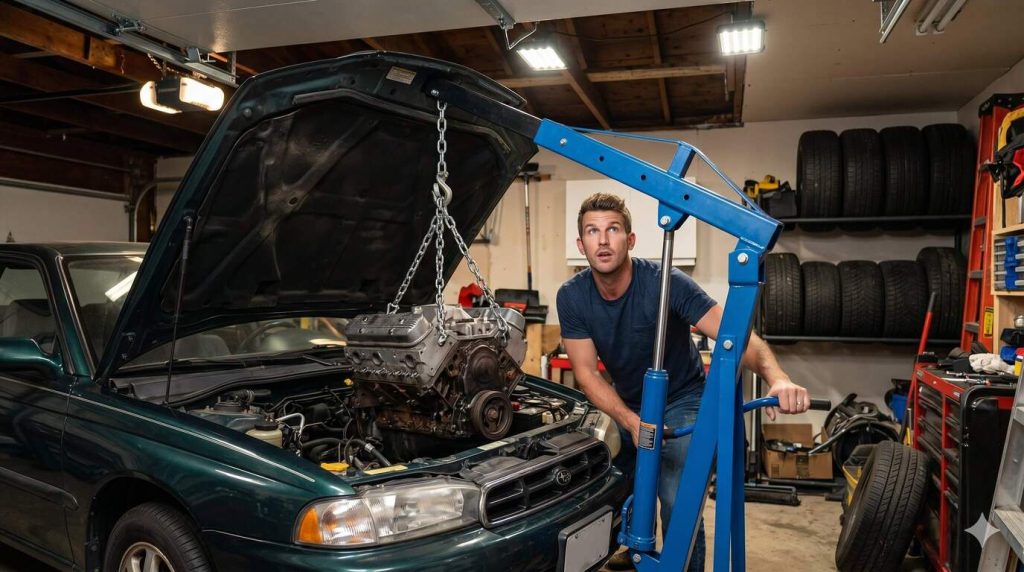
One Saturday morning, I was pulling an engine out of a small sedan. Tight garage, low ceiling, tools everywhere. I started pumping the hydraulic jack, watching the engine rise slowly. Metal creaked, chain got tight… and then—thud. The boom hit the hood before I even got close to max height.
That’s when it clicked.
Real-world lift height depends on more than specs:
- Hood clearance eats up space fast
- Boom position changes how high it can go
- Engine weight affects how smoothly it lifts
- Garage ceiling quietly limits everything
So yes, how high does an engine hoist lift? On paper, up to 8 feet.
In real life? It’s often less—sometimes a lot less.
Here’s a quick breakdown from my own use:
| Situation | Expected Lift Height | What Actually Happens |
|---|---|---|
| Open space, no car | 8 ft (max) | Close to full height |
| Sedan in garage | 6–7 ft | Hood limits lift |
| SUV or pickup | 5–6 ft | Height becomes tight |
| Low ceiling garage | 5–6 ft max | Ceiling stops you |
I’ve learned this the hard way: don’t trust the number on the box. Think about your space, your car, and how you’ll actually use the hoist.
What Determines How High an Engine Hoist Can Lift?
Not all hoists behave the same—these factors quietly control everything.
I used to think all engine hoists lift the same. I was wrong. After a few messy weekends in my garage, I learned that how high an engine hoist can lift depends on a few key things. And they sneak up on you when you least expect it.
Boom Length and Position Settings
This one caught me off guard the first time.
- Short boom = higher lift, less reach
- Long boom = more reach, lower lift
I remember stretching the boom out to reach deeper into the engine bay. Felt smart at the time. Then I tried lifting… and it just wouldn’t go high enough.
Those 1-ton, 2-ton markings? They’re not just about weight. They change how high the hoist can lift too.
Hydraulic Ram Stroke (The Real Limiter)
This is the heart of the whole thing.
The hydraulic ram controls how far the hoist can actually rise. You pump the handle, and it pushes the boom up. Simple.
But here’s what I noticed:
- A good ram lifts smooth and steady
- A cheaper one feels weak near the top
I’ve had one hoist that just… stopped early. Still had space above, but no more lift. Frustrating.
Frame Design and Pivot Geometry
Not all frames are built the same.
- Folding hoists are easy to store, but sometimes limit movement
- Fixed frames feel stronger and more stable
- Low-profile designs fit under cars better, but may reduce lift angle
I once used a compact folding hoist in a tight spot. It fit perfectly under the car. But when lifting, the angle felt off, like it was holding back a bit.
Load Weight (Yes, It Affects Height)
This is something you feel, not just measure.
- Light engines lift fast and high
- Heavy engines feel slower and may not reach full height
Real example from my garage:
- A small 4-cylinder came out smooth, no struggle
- A heavier V8? Totally different story
The hoist lifted it—but slower, tighter, and it felt like I was pushing its limits.
Quick Reality Check
| Factor | What I Expected | What Actually Happened |
|---|---|---|
| Boom extended | More flexibility | Lost lift height |
| Cheap hydraulic ram | Same performance | Stopped early |
| Folding frame | Easy use | Slight lift limitation |
| Heavy engine | Same lift height | Reduced effective lift |
From my experience, lift height isn’t just a number. It’s a mix of setup, weight, and small decisions you make in the moment. And yeah… sometimes you only learn it the hard way.
Typical Engine Hoist Lift Heights (By Type)
Let’s put real numbers on the table so you know what to expect.
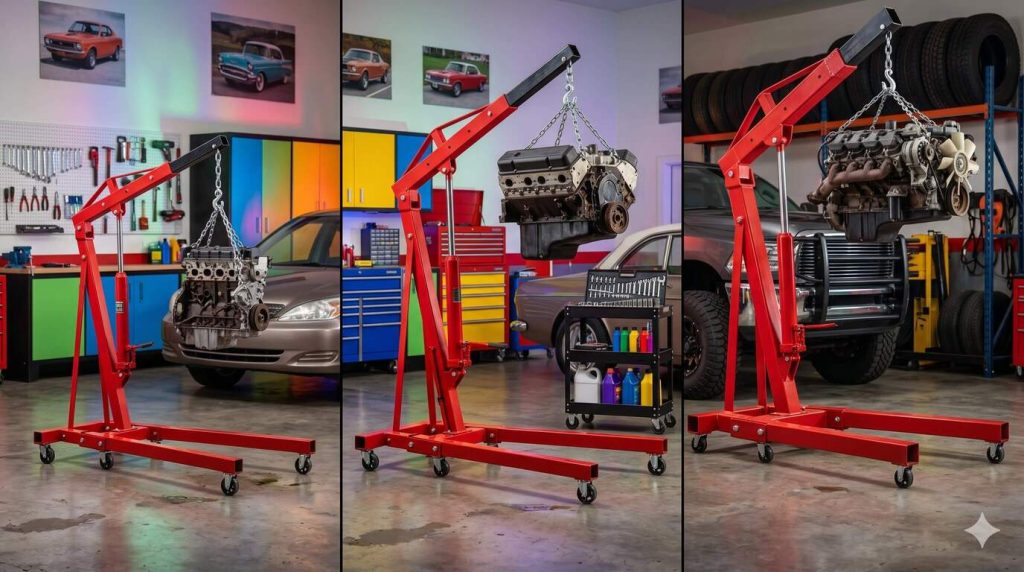
When buddies ask me, “how high can an engine hoist lift?”, I always say it depends on the type. I remember standing in a greasy auto parts store on a cold Tuesday night. I was staring at a row of bright red hoists. They all looked exactly the same to me.
But trust me, they do not lift the same. Here is what you actually get based on the gear you buy.
1-Ton Engine Hoist
- Lift height: 70 to 80 inches
- Best for: Sedans and compact cars
I started with a small 1-ton model. It was cheap, and my back was tired of fighting heavy parts. I bought it to pull a motor from an old Civic. It did the trick. But let me tell you, maxing out an 80-inch lift on a thin metal frame made my hands sweat. The metal groans a bit at the top. It is great for small cars, but keep your goals realistic.
2-Ton Engine Hoist
- Lift height: 75 to 90 inches
- Best for: Most home garages
This is the sweet spot. I finally upgraded to a 2-ton hoist when I needed to pull a heavy V8. You get a much better lift height here. The frame feels rock solid under your hands. Also, the hydraulic pump does not feel like it will quit on you. If you spend your weekends covered in oil in a home garage, a 2-ton is the safest bet.
Heavy-Duty / Shop Hoists
- Lift height: 90 to 100+ inches
- Best for: Pro shops and truck repairs
Now we are talking big leagues. I once rented a massive heavy-duty hoist to pull a motor from a tall pickup truck. The sheer size of this thing ate up half my driveway. These monsters clear 100 inches easily. You see them in pro shops for a good reason. They lift high enough to clear tall grilles and big tires without breaking a sweat.
Quick Guide to Hoist Heights
| Hoist Type | Real-World Lift Height | Best Used For |
| 1-Ton Hoist | 70 to 80 inches | Small sedans, light blocks |
| 2-Ton Hoist | 75 to 90 inches | Home garages, most cars |
| Heavy-Duty | 90 to 100+ inches | Lifted trucks, pro shops |
Will an Engine Hoist Lift High Enough for Your Vehicle?
This is what you really care about. When friends ask how high can an engine hoist lift, they just want to know if it clears their bumper. Here is the short answer.
Sedans and Small Cars
- Usually no problem
- Hood clearance is the main limit
Cars are easy. One cold Friday night, I pulled a sedan motor. My garage smelled like old gas. The hoist lifted high enough. But the boom hit the hood with a loud clink. Just take the hood off. It saves you so much grief.
SUVs and Pickup Trucks
- Often tricky
- Needs a load leveler or extra boom height
Trucks sit high. Last summer, I worked on a stock pickup. The tall front grille got in the way. I had to use a load leveler. It tilts the heavy block as it comes up. If you do not tilt it, the oil pan will catch the grille.
Lifted Trucks or Vans
- Standard hoists may fail here
- Engine gets stuck mid-air
A normal hoist might let you down. One hot Sunday, sweat stung my eyes in a bright driveway. I pumped the jack all the way up. The motor just hung mid-air, still stuck in the bay. I wanted to scream. We had to take off the front tires just to drop the truck down.
Vehicle Clearance Guide
| Vehicle Type | Lift Difficulty | The Quick Fix |
| Sedans | Easy | Remove the car hood |
| SUVs & Trucks | Medium | Use a load leveler |
| Lifted Trucks | Very Hard | Drop the truck off its tires |
Real Garage Constraints Most People Ignore
This is where plans fall apart. You focus so much on the specs that you forget where you work.
Ceiling Height Limits
- Typical garages are only 8 or 9 feet tall.
- The hoist, chain, and engine take up a lot of room.
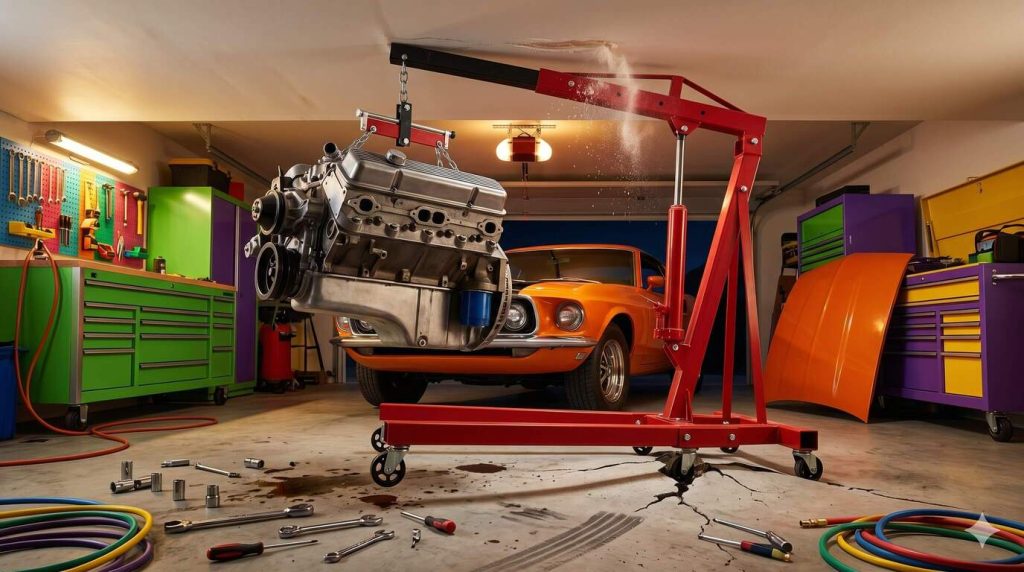
Most home garages have low ceilings. That 8-foot roof sounds tall until you start lifting. One rainy Tuesday, I was pulling a motor. The hoist was lifting smoothly. Then, I heard a loud scrape. The top of the boom hit my drywall ceiling. White dust fell right on my face. I had to laugh at my own mistake. When you ask how high can an engine hoist lift, look up. Your roof might stop you first. You run out of room very fast.
Floor Space and Positioning
- Hoist legs need clear space under the car.
- Sloped floors make lifting dangerous.
You need space for the long metal legs. If your floor is a mess, you will struggle. I once tried to lift a heavy block on a cracked, sloped floor. A front wheel got stuck. The whole frame leaned hard to the left. My heart jumped. It was scary. A bad floor limits your lift height and ruins your balance. Always sweep your workspace first.
Hood Removal vs Tilting
- Removing the hood gives you pure vertical room.
- Tilting the engine means less lift height is needed.
You have two easy choices here. First, just take the hood off. It takes ten minutes. You get so much more room to work. I always do this now. Second, tilt the engine as you lift. Tilting means the motor clears the front grille sooner. You do not have to lift it as high. Both tricks save you from a major headache.
Quick Garage Problem Solver
| Garage Constraint | The Big Problem | My Easy Fix |
| Ceiling Height | The boom hits the roof | Keep your lifting chains very short |
| Floor Space | Legs get stuck under the car | Work on flat, clean concrete only |
| Tight Hood | The engine block hits the metal | Just take the hood off completely |
How to Get More Lift Height (Smart Workarounds)
If your hoist is too short, do not panic. Here is how to cheat the system when figuring out how high can an engine hoist lift.
Use a Load Leveler
- Tilts the engine to gain room
- Makes removal smooth
I hooked one up last fall. You crank the handle, tilt the heavy block, and slide it right past the firewall. It saves you vital inches of clear space.
Raise the Vehicle Slightly
- Jack stands add extra clearance
- Safety always comes first
One chilly night, my hoist maxed out. I carefully lifted the car body on heavy jack stands. It gave me the room I needed to clear the block. Just check your balance first.
Adjust Boom Position
- Trade reach for more height
- Slide the arm back
Most hoists have a metal pin. Pull it out and slide the boom in. A shorter arm lifts higher in the air. You lose a little reach, but it works great.
Remove Obstructions
- Take off the radiator, grille, and hood
I once scraped my bare knuckles bloody on a rusty van grille. It stung so bad. Never again. Take twenty minutes to unbolt the front parts. It opens up the whole bay.
Quick Height Fixes
| Your Problem | Smart Workaround | The Result |
| Engine sticks | Use a load leveler | Motor tilts and clears |
| Hoist maxed out | Shorten the boom | Arm lifts much higher |
| Front end blocks you | Unbolt grille and radiator | Wide open workspace |
Common Mistakes That Limit Lift Height
These are the silent killers of a clean engine pull. You set it all up. But the lift stops short. Why? Most times, it is just a small mistake.
Here are the things that ruin your lift:
- Wrong boom setting: Pulling the arm fully out gives you long reach. But you lose a lot of lift height. Do not pull it out unless you have to.
- Too much weight: Heavy blocks make the metal frame sag. This limits how high can an engine hoist lift. Always check your weight ratings.
- Off-center load: A bad chain setup makes the block tilt hard. It will catch on the car body as it comes up.
- Cheap pumps: Weak fluid seals lose pressure fast. The ram just stops lifting.
One hot Saturday afternoon, my garage felt like an oven. Sweat dripped off my nose and hit the dirty concrete floor. I was pulling a heavy old V8. I had the boom fully extended for no good reason. I grabbed the cold metal handle. You pump harder… nothing moves… frustration kicks in. My cheap hydraulic pump just gave up. I had to drop the block and start all over. I felt so dumb.
Quick Buying Guide: Choose the Right Lift Height
Let’s wrap this up. When you finally buy one, tie everything back to what you actually drive. If you are trying to figure out how high can an engine hoist lift before you spend your cash, read the box carefully.
For Home Garage Users
- Minimum recommended: A solid 2-ton hoist
- Look for: An adjustable boom and a high max lift spec
I bought a weak 1-ton hoist once. It was a freezing Wednesday night. I dragged the heavy cardboard box into my garage. As I built it, the painted metal felt cheap and thin. Do not make my mistake. A 2-ton model is the sweet spot for a home shop. It gives you a stable frame and plenty of height for normal cars.
For Trucks and SUVs
- The rule: Go heavy-duty
- The trick: Buy an extended height model
Trucks will fight you. Their tall grilles and big tires are a pain. If you work on SUVs, skip the cheap stuff. A heavy-duty hoist costs a bit more, but it saves your sanity. You need that extra height so the dirty oil pan actually clears the front bumper.
Key Specs to Check
- Max lift height: Look at the real inches, not just the weight capacity.
- Boom positions: More arm holes mean more lifting options.
- Hydraulic stroke length: A longer ram pushes the arm much higher.
Do not just look at the weight limit. Pumping a stiff, short hydraulic ram while your motor is stuck mid-air is a terrible feeling. Always check the stroke length.
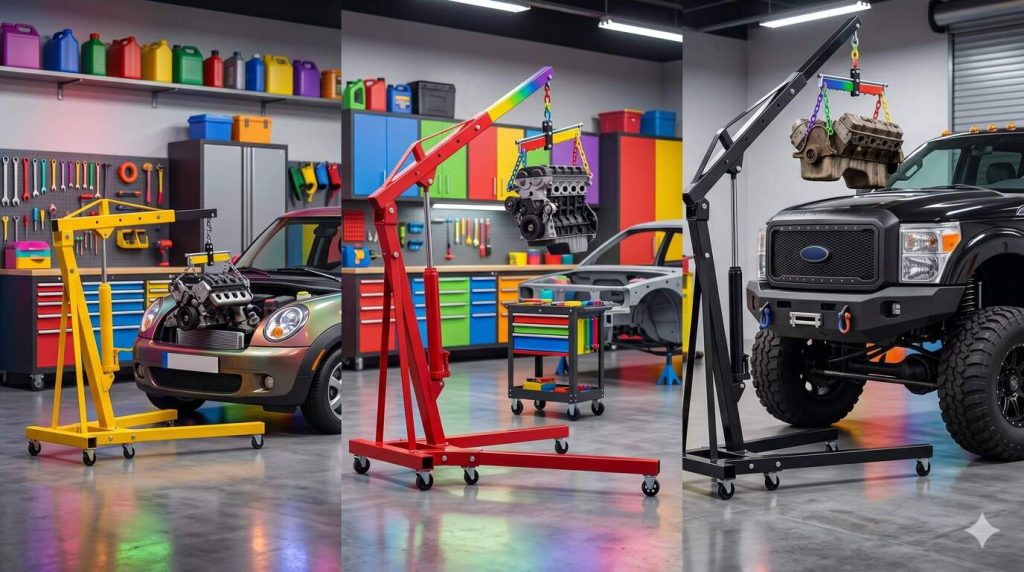
Smart Buyer Checklist
| What You Drive | What You Should Buy | Why It Works Best |
| Basic Cars | 2-Ton Standard Hoist | Safe, stable, and lifts high enough |
| Tall Trucks | Heavy-Duty Hoist | Long boom clears tall front grilles |
| Mixed Fleet | Hoist with Adjustable Boom | Lets you trade reach for lift height |
Frequently Asked Questions
Do chains alter how high my lifting tool will reach?
Yes, long chains steal your lifting room fast. Keep your rig short and tight to clear the bumper with ease. Try this neat trick I use to gain free space today!
Is it safe to use my shop crane on grass or dirt?
No, never try to pull a motor on soft dirt. The heavy tool will sink fast and tip the load over. Always work on a flat, hard floor like I do to stay safe.
How do I measure the roof for a car motor pull?
First, find out how high can an engine hoist lift. Add your car size and check your roof. I always make sure the tall boom will not hit my ceiling when I pump it!
Does pulling off the front tires help gain space?
Yes, taking off the front tires is a great trick. It drops the car nose down to give you free space. This is my best way to swing the big block out with no stress!
Can one guy use a heavy lift crane all alone?
Yes, one guy can pull a block all alone. But I always grab a good pal to help me out. A friend helps guide the heavy iron so you do not break a car part.