Jack stands come in two locking styles, ratchet and pin, and the difference is not cosmetic. It is the mechanism that decides whether the stand holds a car reliably or not. There is also a real, documented recall history behind why some buyers are nervous about cheap steel stands specifically, and it is worth knowing the actual facts rather than a vague rumor before you buy or trust a pair you already own.
Direct answer: pin for outright strength, ratchet for finer adjustment, and check any stand you own against the recall
A pin-style stand is generally regarded as the stronger, simpler mechanism and is the default choice for heavy-duty use. A ratchet-style stand allows finer height adjustment in smaller increments, which is useful, but the ratchet mechanism itself carries more failure-mode risk than a solid pin. If you already own steel jack stands, particularly older Harbor Freight Pittsburgh-branded ones, it is worth checking them against the recall history below before your next lift.
Ratchet-style stands: how they lock, and the tradeoff
A ratchet stand has a ratchet bar built into the support post that automatically locks into place as you raise it, engaging at small height increments. That fine adjustability is genuinely useful when you need a height between a pin stand’s fixed holes. The tradeoff is that a ratchet mechanism, being a spring-loaded pawl engaging teeth, has more moving parts that can wear, and is generally considered to carry more risk of failure over time than a solid pin passing through a sleeve.
Pin-style stands: how they lock, and why they’re the heavy-duty default
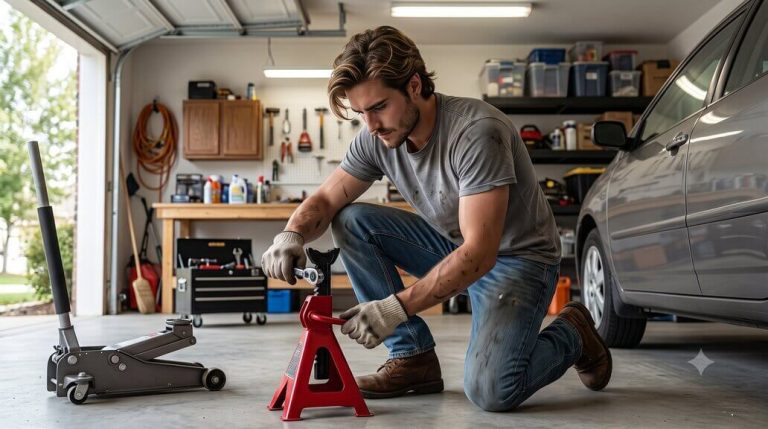
A pin-style stand uses a solid pin inserted through matching holes in an inner and outer sleeve. To change height, you pull the pin, slide to the new height, and reinsert it. The adjustment steps are coarser than a ratchet’s, but the locking mechanism itself, a solid pin bearing the load in shear through two aligned holes, is simpler and is why pin designs are the favored choice for heavy-duty and shop use. The real-world drawback is that pin stands cannot make small adjustments to compensate for slightly uneven ground or a support point that falls between two pin holes.
Double-locking designs
Some stands combine both mechanisms: a ratchet for adjustment, plus a pin or secondary lock engaged once the height is set. These are marketed specifically on that redundancy, giving you the ratchet’s adjustability with a pin’s more reliable hold once you are in position. If you are choosing between styles and can’t decide, a double-locking design is a reasonable way to get most of both advantages.
The recall, named plainly
Harbor Freight recalled its Pittsburgh-brand steel jack stands across three separate filings with the National Highway Traffic Safety Administration: RCLRPT-20E016, RCLRPT-20E027, and RCLRPT-20E046, covering 3-ton and 6-ton units manufactured between December 2012 and July 2020, for risk of sudden collapse under load. One filing attributes the defect to aging production tooling; another cites insufficient welding at the base. Injuries were reported and affected customers were offered refunds. This is a real, specific, sourced event covering specific manufacture dates and models, not a reason to distrust jack stands as a category, but it is exactly why checking any stand you already own is worth five minutes.
How to check a stand you already own
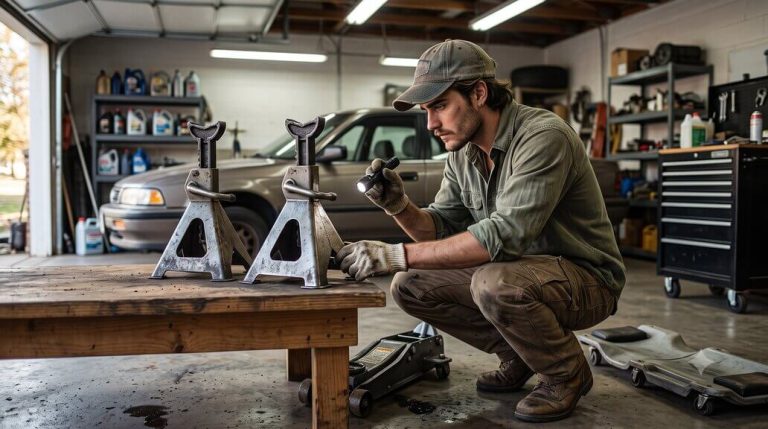
If you own steel jack stands, particularly an older pair, look up the brand and model against NHTSA’s recall database directly rather than relying on memory of when you bought them. Beyond the recall check, inspect the stand itself before every use regardless of brand: the locking mechanism should engage fully and audibly, the base should sit flat with no visible bend or crack, and the support post should show no significant rust pitting at the load-bearing points.
What to look for on a new pair
Match the stand’s rated capacity to your vehicle’s actual weight with real margin, not the bare minimum. Look for a visible standards marking (ANSI/PALD or equivalent) on the stand itself. Verify the locking mechanism by hand in the store or before first use at home, actually engaging it and confirming it seats fully, rather than trusting the listing description alone. Our pillar guide covers where stands fit into the complete safe-lifting setup, and our comparison of jack stands vs ramps is worth reading if you have not yet decided which tool actually fits your next job. If you are also deciding on the jack itself, why a floor jack is not a support explains the rule that applies no matter which stand you choose.
Buying in pairs, and matching height range to your vehicle
Jack stands are sold and should be bought as a matched pair (or set of four, for jobs lifting both ends), not mixed and matched from different products or brands. A mismatched pair can seat differently or lock at different effective heights, which undermines the level, even support the whole setup depends on. Check the stand’s stated height range, both its minimum and maximum, against where your vehicle’s rated lift points actually sit once it is raised; a stand whose range does not comfortably reach your car’s lift point in either direction is the wrong stand for that vehicle, regardless of how well-reviewed it is in general.
Storage and everyday handling
Steel stands are heavier to move around a garage floor and to store, which matters if you are lifting them in and out of a cabinet or shelf regularly rather than leaving them set up. This is a minor consideration next to the locking-mechanism and recall questions above, but it is a real one worth factoring in if storage space or the stands’ resting spot is already tight in your garage.
Aluminum jack stands exist too, briefly
Most jack stands on the market, and most of the recall history above, involve steel construction, but aluminum jack stands are also sold, generally at a price premium, for the same weight and rust-resistance reasons that apply to aluminum floor jacks. For a fixed home garage that never travels, the same logic applies here as with jacks: the premium buys lighter weight and better corrosion resistance, not a fundamentally safer locking mechanism, so choose based on ratchet-versus-pin and rated capacity first, and treat material as a secondary decision.
Frequently asked questions
Are ratchet-style jack stands unsafe?
Not inherently, but the mechanism carries more failure-mode risk than a solid pin design, according to sources comparing the two systems. Many ratchet stands work reliably for years; a pin design is simply the more conservative choice for anyone prioritizing outright strength.
Were all Harbor Freight jack stands recalled?
No. The recalls covered specific Pittsburgh-brand 3-ton and 6-ton steel jack stands manufactured within specific date ranges between December 2012 and July 2020, across three separate NHTSA filings. Check your specific model and manufacture date against NHTSA’s records rather than assuming all stands from a brand are affected.
How do I check if my jack stands were recalled?
Look up the brand, model, and manufacture date (if marked on the stand) against NHTSA’s recall database directly, rather than relying on secondhand summaries.
Do I need double-locking stands?
Not necessarily, but they offer a reasonable middle ground if you want a ratchet’s adjustability and a pin’s more reliable final hold in one product.
What rated capacity should I buy?
Match the stand’s rating with real margin above your vehicle’s actual weight, which you can typically find on a placard inside the driver’s door or in your owner’s manual, rather than buying to the exact minimum.