If this is genuinely a one-time engine pull with no other project on the horizon, renting is usually the more sensible choice. If you expect to do this again, are not certain your car habit is a one-off, or simply want the tool on hand without a rental counter’s schedule, buying tends to make more sense over time. Neither choice is “the smart one” in the abstract. It depends on how often the hoist will actually earn its keep, and on costs that a simple day-rate comparison leaves out entirely.
What renting actually involves beyond the day rate
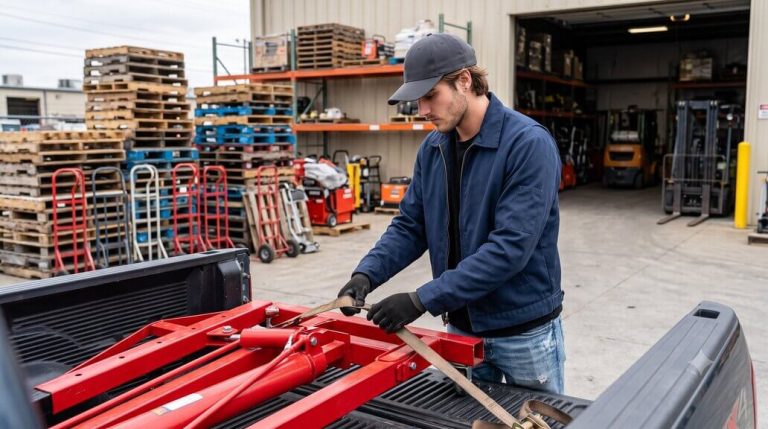
Renting an engine hoist is more than picking a price and showing up. Most rental counters require a deposit, hold your card on file against damage, and work on a day or week window rather than an hourly one, so a job that runs long can cost you an extra rental period. You will also need a vehicle capable of transporting the hoist, since most are not compact even when folded, and you will need to plan your project around the rental’s pickup and return times rather than your own schedule.
None of this makes renting a bad option. For a genuine one-off job it is frequently still the more sensible choice. It does mean the true cost of renting is the rental fee plus the logistics of getting the tool to your garage and back on someone else’s timetable, not just the number on the counter’s price sheet.
What owning actually costs beyond the sticker price
Buying trades rental logistics for a different set of ongoing costs that are easy to underweight when comparing a purchase price to a rental fee. A hoist you own needs somewhere to live between projects. Our comparison of folding vs fixed hoists covers exactly how much of a factor storage footprint is for a one-car garage. It also needs basic upkeep over years of ownership; caster wheels in particular are commonly reported as the first thing to need attention, which our guide to engine hoist casters covers in detail.
Ownership also means you decide the capacity and boom reach up front rather than taking whatever the rental counter has in stock. If you expect to need a specific rating for future work, see our comparison of 1-ton vs 2-ton hoists to make sure a purchase actually covers what you will need.
How to do the honest breakeven math yourself
Pricing for both renting and buying varies by region, retailer, and season, and changes often enough that any number stated here would likely be out of date or wrong for your area by the time you read it. Rather than quoting a figure, here is the calculation to run with your own numbers:
- Get a real rental quote for the length of time your project will actually take, including any deposit.
- Get a real purchase price for a hoist with the capacity and boom reach your job requires.
- Divide the purchase price by the rental cost per use to see how many rentals it would take to break even.
- Honestly estimate how many more times you expect to need a hoist in the next few years, not a hopeful guess but a realistic one.
- If your honest estimate meets or exceeds the breakeven count, buying is the better value. If it clearly does not, renting is.

This framework holds regardless of what rental and purchase prices happen to be in your area right now, which is exactly why it is more useful than a number that may already be stale.
What tips the decision either way
A few factors push the decision one way even when the raw math is close:
- Garage space. If you genuinely have nowhere to store a hoist between projects, that favors renting even if buying would technically break even sooner.
- Timeline flexibility. If your project could stretch past a rental window (a parts delay, a discovered second problem once the engine is out), owning removes the pressure of a return deadline.
- Uncertain future need. If you are not sure whether you will do this again, renting keeps the decision reversible; you can always buy later once you know.
- Resale value. A well-maintained hoist can often be resold if your future need does not materialize, which changes the true cost of buying versus what the sticker price alone suggests. If you are looking at buying used rather than new, that is a related but separate set of questions from renting entirely. See our comparison of engine hoist types if you have not settled on a floor crane specifically.
A few things people forget to ask a rental counter
Beyond the day rate, a handful of questions determine whether renting actually goes smoothly, and they are worth asking before you book rather than discovering at pickup:
- What happens if the job runs long? Ask what the counter charges for a late return before you commit to a window, not after you are already past it.
- What condition does the hoist need to come back in? Some counters charge separately for cleaning or minor damage that would not concern you on a hoist you own.
- Does the rental include any rigging accessories? A rented hoist may or may not come with a chain, lifting plate, or load leveler included, and renting those separately changes the total cost picture. See our comparison of lifting plates, chains, and levelers if you are not sure which you will need.
- Is there a minimum rental period? Some counters rent by the day only, even if your job takes a few hours, which changes the true cost per use.
None of these questions change the basic renting-versus-buying logic, but skipping them is how a rental that looked cheap on paper ends up costing more than expected, or how a job gets rushed to beat a return deadline instead of being done properly.
A short decision checklist
- Is this genuinely a one-time project, or the start of an ongoing habit?
- Do you have realistic storage space for a hoist between uses?
- Get real local quotes for both renting and buying before deciding on price alone.
- Run the breakeven math in the section above with your own numbers.
- Weigh timeline flexibility and resale potential, not just the raw price comparison.
Frequently asked questions
Is it ever cheaper to rent an engine hoist multiple times than to buy one?
It can be, depending on your local rental and purchase prices and how many projects you actually complete. Run the breakeven calculation above with real local quotes rather than assuming either option is automatically cheaper.
What should I check before renting an engine hoist?
Confirm the rental period, deposit requirements, and pickup/return logistics, and make sure you have a vehicle capable of transporting it. Also confirm the rated capacity of the specific unit you would be renting covers your job.
Does buying used instead of new change the math?
It can lower the purchase price side of the equation, but a used hoist needs its own inspection for wear, especially in the casters and hydraulic ram, before you factor it into a buy-versus-rent decision.
If I buy and it turns out I don’t need it again, have I lost money?
Not necessarily. A well-maintained hoist retains resale value, which changes the true cost of ownership compared to the sticker price alone. That said, resale value is not guaranteed and depends on condition and local demand.
Is renting always the right call for a first-time engine puller?
Not automatically. If you are already fairly confident this is the start of an ongoing habit, buying from the start can make more sense than renting once and then buying anyway for a second project.