A used engine hoist can be one of the best deals in a home garage, or a hazard wearing a $80 price tag. The difference comes down to five things: the chain and hardware, the hydraulic ram, the frame and welds, the locking pins, and whether the seller will actually run it under load while you watch.
Check all five before any money changes hands. If any one of them fails, that is not a bargaining chip, it is a reason to walk away, because none of these are repairs a home garage should attempt on a tool meant to hold an engine over your head.
The direct answer, then the detail
Bring gloves, a flashlight, and ideally another person. Inspect the chain, hooks, hydraulic ram, boom, legs, welds, and locking pins before the hoist ever lifts anything. Then, if it still looks sound, ask the seller to load it and run it through its full range of motion so you can watch it work, not just sit there. A hoist that passes every check is a genuinely good used-tool purchase. One that fails any single check is not worth negotiating down on price, because the failure modes involved (a snapped chain, a collapsing boom, a slipping lock) do not happen slowly enough to react to.
The chain and hardware
Run the full length of the lifting chain through your hands, link by link. You are looking for stretched links (noticeably elongated compared to their neighbors), kinks, cracked or corroded links, and any sign of a repair (a mismatched link, a weld on a link that was never meant to be welded). Check the S-hooks and any connecting hardware for bending; a hook that has been bent open even slightly has been overloaded at some point and should not be trusted again regardless of how it looks now.
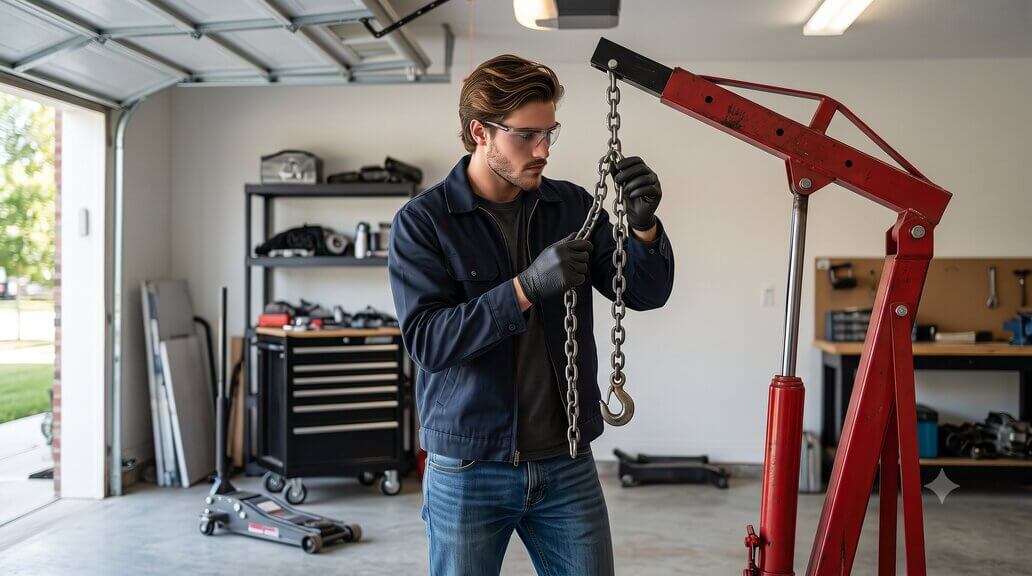
None of this hardware is expensive to replace new, so a chain or hook in doubtful condition is a legitimate reason to negotiate the price down to cover replacing it, not a reason to use it as-is.
The hydraulic ram
The hydraulic cylinder is the part most likely to show its age. Look along the length of the ram for weeping fluid, active leaks, or pitting and corrosion on the exposed rod, since pitting on the rod surface will damage the internal seals every time it passes through them. Extend and retract the ram a few times by hand if the hoist allows it, watching for smooth, even movement rather than sticking, jerking, or a ram that will not hold its position once extended.
Our piece on engine hoist hydraulic problems walks through the specific symptoms of a failing ram in more depth, and it is worth reading before you buy if you want to understand what you are actually looking at.
The frame, boom, and welds
Look over the entire frame: the boom, the legs, and every weld joining them. You are checking for bends (a boom that is not straight along its length), cracks anywhere, and especially for any weld repair that was not done by the original manufacturer. An amateur weld repair on a structural member of a lifting tool is one of the more common ways a used hoist ends up for sale cheap, and it is also one of the more dangerous defects, since a repaired weld can look solid and still fail well below the hoist’s original rating.
If you see any repair weld you cannot verify was done professionally and to the original specification, treat the hoist as structurally unknown, not as structurally sound with a cosmetic patch.
The locking pins
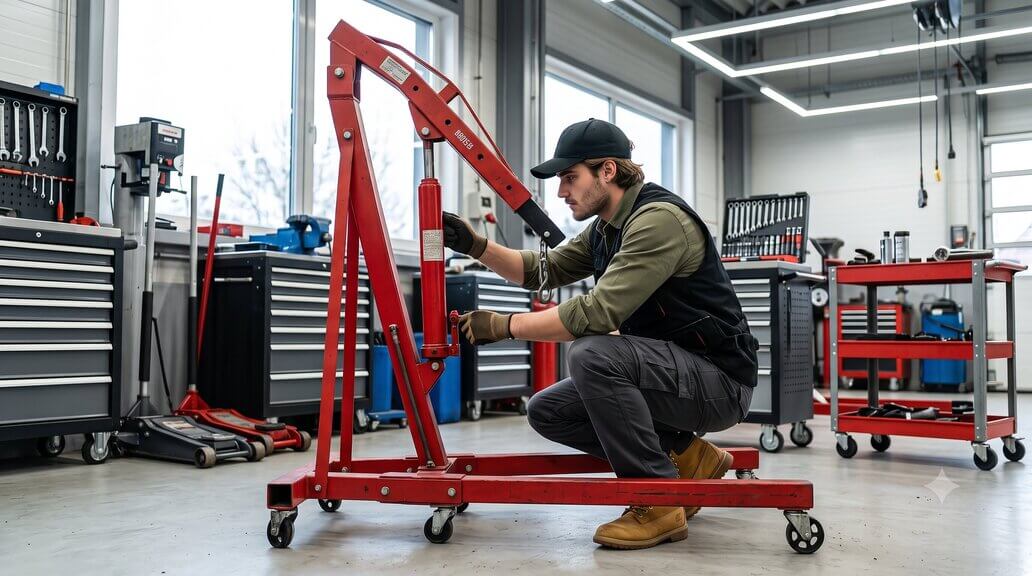
Every engine hoist relies on locking pins to hold the boom and legs at a set position once you have chosen it. Check that each pin seats fully and securely at every hole the hoist offers, not just the one position the seller has it set to.
A pin that is loose, worn oval instead of round, or that will not seat fully in even one position means the hoist cannot be trusted at that position, and since you do not yet know which positions you will need for your own vehicle, every position needs to check out.
Ask to see it lift a real load, not just move empty
An engine hoist can look and feel fine sitting empty and still behave differently under real weight. Before you commit to buying, ask the seller to put a real load on it (an actual engine, an engine stand loaded to a similar weight, or whatever they have on hand) and run it through raising, holding, and lowering while you watch.
Do not pay first and test after. If a seller will not or cannot demonstrate the hoist loaded, that alone is worth treating as a caution sign, whatever the rest of the inspection showed.
What an unknown history means for the rating on the tag
A used hoist’s capacity tag describes what that hoist was rated for when it was new, tested by the manufacturer under known, controlled conditions. It does not describe this specific hoist’s condition today, and you have no way to know how it was actually used, overloaded, stored, or maintained before you saw it. That is not a reason to assume the worst about every used hoist, but it is a reason to treat the tag’s number as a starting point to verify through your own inspection, not as a guarantee you can rely on the way you could with a new hoist straight from the box.
Our full safety checklist covers what a safe lift requires regardless of whether the hoist is new or used, and it is worth reading in full either way.
When to walk away instead of negotiating
Some defects are worth negotiating around: a stretched chain, worn hooks, minor surface rust with no structural pitting. These are known, inexpensive fixes. Others are not negotiable at any price for a home garage: a cracked weld, a boom that is visibly bent, a locking pin that will not seat, or active fluid leaking from the ram under any load.
If the used hoist you are looking at fails one of these, the honest answer is to walk away and either keep looking or consider whether renting makes more sense for how often you will actually use one.
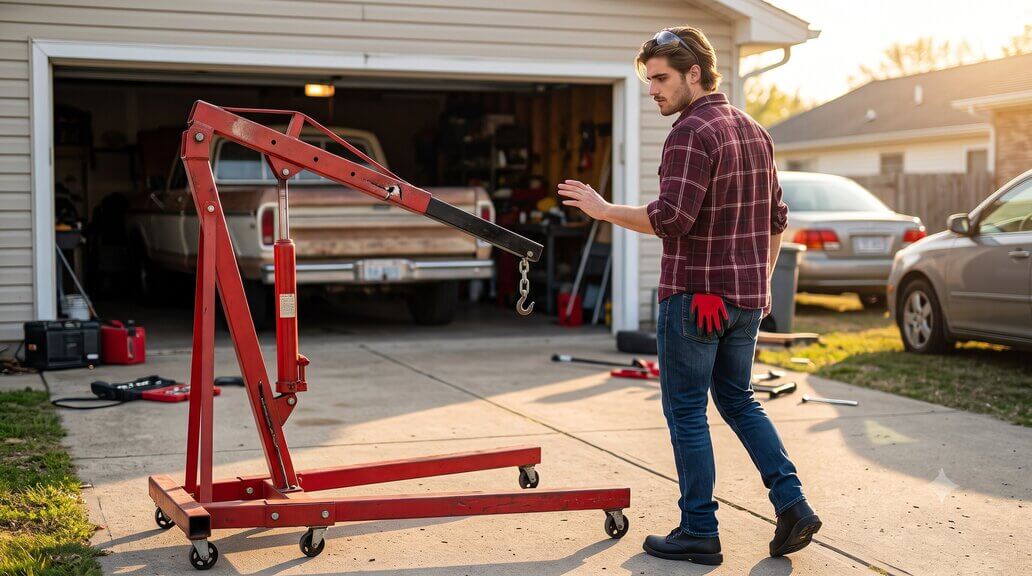
Casters are worth a specific look too; our piece on engine hoist caster wheels covers what worn or seized casters do to control of a loaded hoist, and a used hoist that has sat outdoors or in a damp shop is a common place to find this problem.
Frequently asked questions
Is a cheap used engine hoist ever a good deal?
Yes, if it passes every structural and hydraulic check and the seller will demonstrate it loaded. The low price on a used hoist reflects its age and cosmetic condition, not necessarily its safety, and a genuinely sound used hoist can be a real bargain.
What is the single biggest red flag?
A repaired weld on the boom or legs that you cannot verify was done professionally and to the original specification. This is a structural member of a lifting tool, and an amateur repair here is both common in used hoists for sale cheap and one of the more dangerous defects to miss.
Can I fix a stretched chain or bent hook myself and still use the hoist?
Replace the chain or hook entirely with new hardware rated for the job rather than attempting a repair; both are inexpensive compared to the hoist itself and neither is something to patch.
Should I buy a used hoist without seeing it lift a real load first?
No. Ask the seller to load it and run it through its full motion while you watch before you pay. If they will not or cannot do this, treat that as a reason to be cautious regardless of how the rest of the inspection looked.
Does a used hoist’s rated capacity still apply if I can’t verify its history?
Treat the tag’s rating as a starting point to verify through your own inspection, not a guarantee. An unknown history means you cannot assume the hoist performs today exactly as it did when new.